Tata Motors cars upcoming Safari EV could arrive in January 2027, bringing three-row seating, an electric powertrain and premium technology to the brand’s flagship SUV lineup. Here is everything we know so far about its expected battery options, driving range, features, price and launch timeline.
Tata Motors is preparing to expand its electric vehicle portfolio with the much-anticipated Tata Safari EV. The all-electric version of the popular Safari SUV has been spotted testing on Indian roads, raising expectations that the model could arrive in the Indian market in early 2027.
According to recent automotive reports, the Tata Safari EV launch is now expected in January 2027. The electric SUV was previously linked to a festive-season 2026 launch window, but the latest reports suggest that its commercial debut could take place next year. Tata Motors has not officially confirmed the final launch date, price or complete specifications.
The upcoming model is expected to become one of the brand’s most practical electric vehicles, combining a three-row cabin with the benefits of electric mobility. It will also expand Tata’s EV lineup beyond smaller electric cars and five-seat SUVs, targeting families looking for a spacious, premium electric vehicle.
Tata Safari EV Launch Date in India
The Tata Safari EV is expected to launch in India in January 2027, although the timeline remains unconfirmed. Recent reports suggest that the electric SUV could be among Tata Motors’ major new launches at the beginning of 2027.
The model has already been spotted during road testing, indicating that development is progressing. However, a test vehicle does not necessarily indicate that the production model is ready for launch.
Tata Motors has yet to announce the official unveiling date, booking schedule, variant lineup or customer delivery timeline. These details are expected to become clearer when the company makes a formal announcement.
For prospective buyers, the Safari EV could be worth waiting for if they want a large electric SUV with three-row seating and modern driver-assistance technology.
Tata Safari EV Design: What to Expect
The Tata Safari EV is expected to retain the broad proportions and upright SUV stance of the existing Safari while receiving several electric-specific design changes.
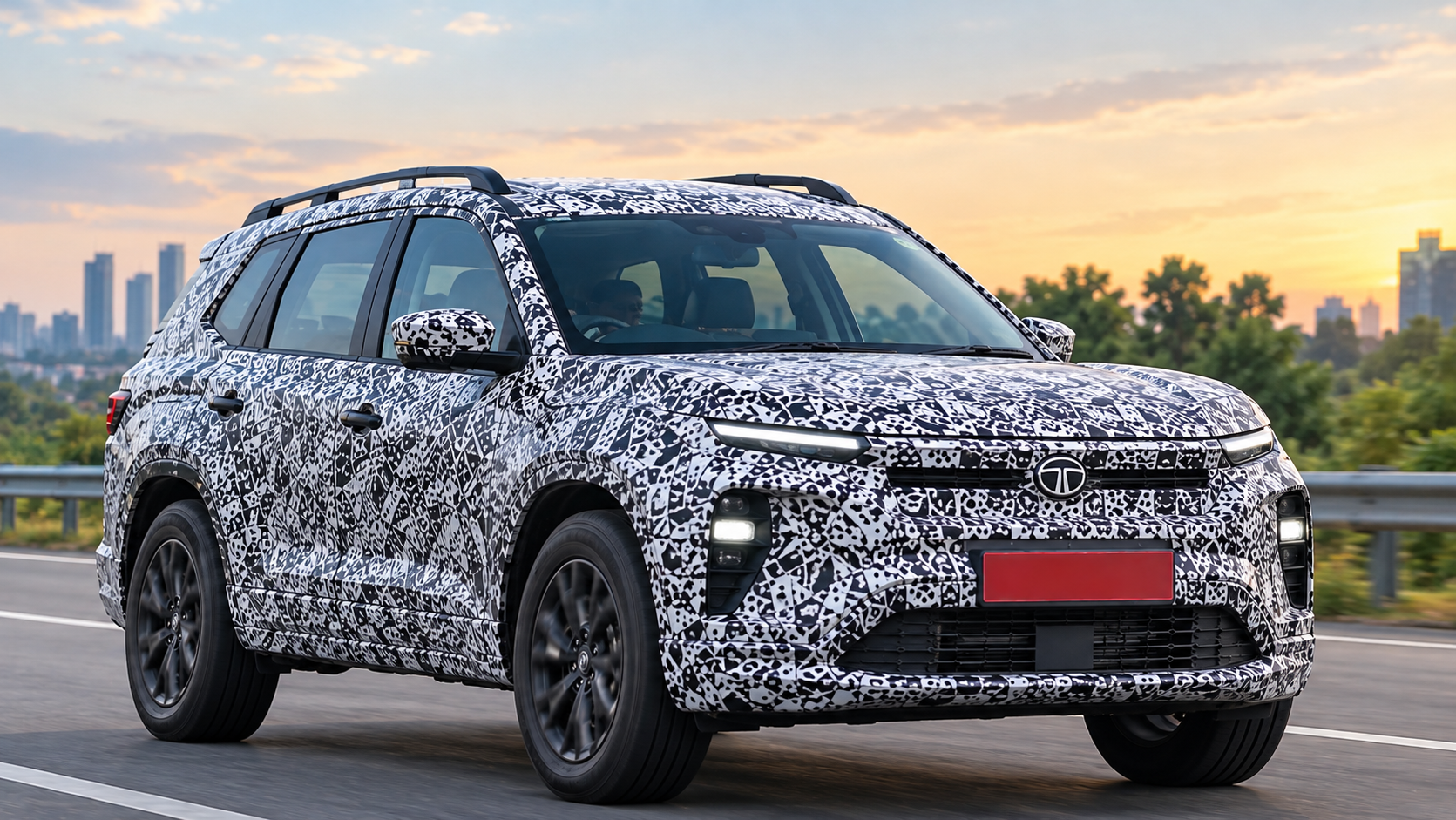
Spy shots of test vehicles suggest that the electric SUV will maintain a familiar silhouette, including its tall body, squared wheel arches, roof rails and prominent rear section. Heavy camouflage has concealed several exterior details, so the final design remains unknown.
At the front, the Safari EV could feature a revised bumper, a closed-off grille treatment and updated LED lighting elements. Aerodynamically optimised alloy wheels may also help improve efficiency.
The rear is expected to receive EV-specific badging and potentially revised bumper detailing. As with other electric SUVs, the absence of an exhaust outlet is one of the visible differences associated with the electric powertrain.
The final exterior design, lighting signatures, alloy-wheel options and colour choices will be confirmed closer to launch.
Tata Safari EV Battery, Range and Performance
The battery and powertrain are expected to be among the most important highlights of the new Safari EV.
Industry reports suggest that Tata Motors could offer battery options similar to those available with the Harrier EV, including 65kWh and 75kWh packs. However, Tata has not confirmed the battery capacities for the Safari EV.
The SUV is also expected to use Tata’s Acti.ev+ electric vehicle architecture, which underpins the Harrier EV. This could allow the company to share some electric powertrain components and technology between the two models.
A rear-wheel-drive configuration and a dual-motor all-wheel-drive version are possibilities, but the final drivetrain lineup remains unconfirmed.
The larger battery option could provide a claimed driving range of more than 500km under the applicable test cycle. Actual range will depend on the final battery capacity, vehicle weight, driving conditions, air-conditioning use, speed and road conditions.
For context, the Harrier EV offers battery and drivetrain combinations with claimed MIDC ranges of approximately 538km for the 65kWh rear-wheel-drive version and over 620km for certain 75kWh variants. These figures apply to the Harrier EV and should not be treated as confirmed Safari EV specifications.
Tata Motors is expected to announce the Safari EV’s official battery specifications, charging times, power output and certified range closer to its launch.
Tata Safari EV Expected Features and Interior
The upcoming electric SUV is expected to receive a technology-rich cabin, potentially borrowing several features from the Harrier EV and Sierra EV.
One of the most discussed possibilities is a triple-screen dashboard layout. Recent reports about a Safari test vehicle have indicated a three-display arrangement, although it has not been conclusively established whether the spotted vehicle represents the production-spec Safari EV or an updated version of the conventional Safari.
If introduced, the layout could include a digital instrument cluster, a central infotainment touchscreen and a separate display for the front passenger.
Other expected features include:
-
A large touchscreen infotainment system
-
A digital instrument cluster
-
A panoramic sunroof
-
Ventilated front seats
-
Dual-zone automatic climate control
-
A premium audio system
-
A 360-degree or advanced surround-view camera system
-
Level 2 advanced driver assistance systems (ADAS)
-
Wireless smartphone connectivity and charging
-
Connected-car technology and over-the-air software updates
-
Vehicle-to-Load (V2L) functionality, subject to final specification
Some of these features are available on related Tata models, but their inclusion in the Safari EV has not been officially confirmed. Equipment may also vary by variant.
Tata Safari EV Seating Capacity and Practicality
The Safari EV is expected to retain the three-row seating arrangement that makes the Safari nameplate popular among larger families.
Six-seat and seven-seat configurations have been reported as possibilities, potentially allowing buyers to choose between a second-row captain-seat layout and a conventional three-seat bench.
A flat electric-vehicle floor could help improve cabin packaging, although the actual floor design and third-row space will depend on the production model’s battery installation and platform engineering.
The SUV is likely to appeal to buyers who want a spacious family vehicle for city use and longer highway journeys without relying on petrol or diesel.
Boot capacity with all three rows in use, third-row comfort, seat-folding arrangements and charging-port placement are yet to be confirmed.
Tata Safari EV Expected Price in India
The Tata Safari EV is expected to occupy a premium position in the company’s electric SUV range, above the smaller electric models and alongside the larger Harrier EV.
Industry estimates suggest an introductory ex-showroom price of approximately ₹22 lakh to ₹32 lakh, depending on the battery pack, drivetrain and variant. This is an estimate rather than an announced price.
The final price will depend on battery costs, equipment levels, production specifications and the positioning of the model against competing electric SUVs.
If Tata manages to keep the entry-level variants competitively priced, the Safari EV could attract families upgrading from conventional SUVs as well as buyers considering their first large electric vehicle.
Buyers should also account for insurance, registration, home-charging installation and any optional charging equipment when estimating the final on-road cost.
Tata Safari EV Expected Specifications
|
Specification
|
Expected details
|
|
Model
|
Tata Safari EV
|
|
Body style
|
Three-row electric SUV
|
|
Expected launch
|
27-Jan
|
|
Platform
|
Acti.ev+ architecture, as reported
|
|
Seating
|
Six- and seven-seat configurations possible
|
|
Battery options
|
65kWh and 75kWh reported
|
|
Drivetrain
|
RWD and AWD possibilities
|
|
Driving range
|
Final figure not announced
|
|
Expected price
|
₹22 lakh–₹32 lakh, ex-showroom (estimated)
|
|
Main rivals
|
Mahindra XEV 9S and other large electric SUVs
|
Tata Safari EV vs Harrier EV: What Will Be Different?
The Safari EV is expected to share important electric powertrain technology with the Harrier EV, but the two models will target slightly different requirements.
The Harrier EV is a five-seat electric SUV designed for buyers who prioritise a spacious two-row cabin. The Safari EV, by contrast, is expected to focus on three-row practicality and family-oriented space.
The Safari EV could also receive a different exterior treatment, revised cabin packaging and equipment tailored to its position as a larger family SUV.
Its additional seating capacity and potentially higher equipment levels could justify a price premium over comparable Harrier EV variants. However, the final price difference and specification comparison will only become clear once Tata announces the production model.
Tata Safari EV Rivals in India
The upcoming Safari EV is expected to compete with large electric SUVs, particularly models offering family-friendly cabin space and long-distance capability.
The Mahindra XEV 9S is expected to be one of its key competitors because of its three-row layout and electric powertrain. The broader premium EV market could also influence the Safari EV’s positioning, depending on the final price and configuration.
The Safari EV’s main selling points could be its three-row seating, Tata’s established presence in India’s EV market, its expected technology package and the familiarity of the Safari nameplate.
Pricing, battery range, charging performance and real-world third-row comfort will be important factors in determining how competitive it is against rivals.
What to Expect Next
The next major updates to watch for are the official unveiling, confirmed battery options, certified driving range, power output, charging specifications and variant-wise pricing.
Tata Motors may also reveal more information about the SUV’s interior, advanced safety systems and booking schedule before deliveries begin. Until then, January 2027 should be treated as the reported launch window rather than a confirmed date.
For buyers planning to purchase a large electric SUV, it makes sense to compare the Safari EV’s eventual specifications with the Harrier EV and competing three-row electric models before making a final decision.

 Khyati Sharma 2026-10-29